

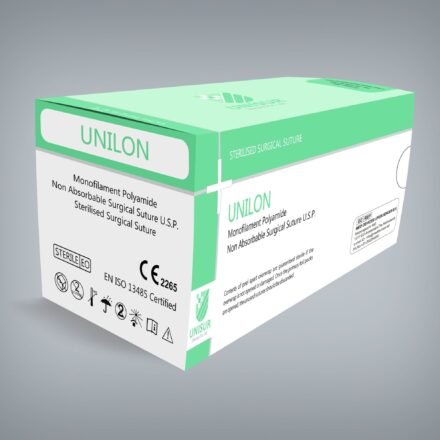
Suture Manufacturers in India: Quality, Innovation, and Reliable Surgical Solutions
Sutures are an essential part of modern healthcare, helping medical professionals close wounds, support tissue healing, and protect surgical sites during recovery. As surgical procedures continue to develop, healthcare providers require sutures that offer consistent performance, appropriate strength, and dependable handling. This has increased the importance of experienced Suture Manufacturers in India that focus on quality materials, precise manufacturing, and reliable production standards.
India has developed a strong medical device manufacturing sector, with manufacturers producing a broad range of surgical sutures for hospitals, clinics, distributors, and healthcare organizations. From absorbable and non-absorbable options to specialized sutures designed for different surgical applications, the industry supports a wide variety of clinical requirements.
Understanding Surgical Sutures
A surgical suture is a medical device used to bring tissue together after an incision, injury, or surgical procedure. Sutures can differ in material, structure, absorption characteristics, needle design, and size. Selecting the appropriate type depends on factors such as the location of the wound, tissue characteristics, healing time, and the procedure being performed.
Absorbable sutures are designed to gradually break down inside the body, making them useful when removing the suture later would be difficult or unnecessary. Non-absorbable sutures are intended to remain in place for longer periods and may be removed after healing when appropriate.
Sutures may also be monofilament or multifilament. Monofilament sutures consist of a single strand, while multifilament sutures contain several strands. Each construction provides different handling and performance characteristics, allowing medical professionals to select products according to procedural requirements.
Role of Indian Suture Manufacturers
A reliable Sutures Manufacturer plays an important role in maintaining the availability of quality surgical products. Manufacturing involves multiple stages, including raw material selection, extrusion or fiber preparation, braiding where required, coating, needle attachment, inspection, sterilization, packaging, and final quality checks.
Consistency is particularly important in surgical sutures. Variations in diameter, tensile strength, needle attachment, or surface characteristics can affect handling during a procedure. For this reason, manufacturers generally establish controlled production and inspection processes to maintain uniformity across batches.
Indian manufacturers serve both domestic and international markets. Their products may be supplied through healthcare distributors and medical device partners, making manufacturing capacity and dependable supply important considerations for healthcare procurement teams.
Importance of Material Selection
The material used to produce a suture directly influences its characteristics. Common suture materials include synthetic polymers as well as naturally derived materials. Synthetic materials can be engineered to provide particular levels of strength, flexibility, and absorption behavior.
When evaluating a suture, healthcare professionals may consider tensile strength, absorption profile, knot security, flexibility, tissue response, and handling characteristics. No single suture material is suitable for every procedure, so product selection should be based on clinical requirements and professional guidance.
Manufacturers therefore need to maintain accurate material specifications throughout production. Traceability of raw materials and controlled processing can contribute to consistent product quality.
Manufacturing Technology and Quality Control
Modern suture production requires precision at several stages. The thread must meet specified dimensional and mechanical requirements, while the attached needle must provide appropriate penetration and secure attachment.
Quality control may include dimensional inspection, tensile-strength testing, needle-related checks, packaging inspection, and sterility-related controls. Sterile surgical products also require carefully controlled packaging systems to protect the product until it is opened for use.
Manufacturers operating in regulated medical-device markets must follow applicable regulatory requirements and quality-management practices. Documentation, batch traceability, process controls, and testing procedures are important components of a structured manufacturing system.
Choosing the Right Suture Supplier
Hospitals, distributors, and healthcare organizations often consider several factors before selecting a suture supplier. Product range is one consideration, particularly for organizations that require different suture types and sizes.
Consistency of supply is another important factor. A supplier should have suitable production and inventory capabilities to support regular requirements. Clear product documentation, packaging information, quality records, and responsive communication can also make procurement easier.
Buyers may also review the manufacturer’s manufacturing capabilities, quality systems, regulatory documentation, and experience with the intended market. Instead of focusing only on price, procurement teams can consider the overall reliability and suitability of the product for their specific requirements.
Applications Across Surgical Specialties
Surgical sutures are used across numerous areas of healthcare. General surgery, orthopaedics, gynaecology, ophthalmic procedures, cardiovascular procedures, plastic surgery, and other specialties may require different suture characteristics.
For example, delicate procedures can require fine sutures with appropriate needle designs and handling properties, while procedures involving stronger tissues may require products with different mechanical characteristics. The selection of size, material, needle geometry, and absorption profile is therefore closely related to the intended application.
This variety has encouraged manufacturers to develop extensive product ranges that address different surgical needs rather than relying on a single universal product.
Growing Importance of Reliable Production in India
India’s medical device sector continues to support domestic healthcare requirements while also participating in international supply chains. For the surgical suture segment, reliable manufacturing depends on technical expertise, quality management, appropriate testing, and efficient production systems.
For healthcare buyers, working with established Suture Manufacturers in India can provide access to a broad product portfolio while supporting dependable sourcing. Manufacturers that maintain consistent specifications and transparent quality processes can help distributors and healthcare organizations manage their surgical product requirements more effectively.
Conclusion
Surgical sutures may be small medical devices, but their role in wound closure and tissue repair makes quality and consistency extremely important. From material selection and precision manufacturing to testing, sterilization, and packaging, every stage contributes to the final product.
As healthcare requirements become increasingly specialized, Indian suture manufacturers have an important role in supplying products suited to diverse surgical applications. Hospitals, distributors, and medical organizations can evaluate manufacturers based on product suitability, quality systems, documentation, manufacturing capabilities, and supply reliability. A careful approach to supplier selection helps ensure that surgical teams have access to appropriate sutures for their clinical requirements.