
MHRA Registration and FDA 510(k) Consultant: A Complete Guide to Medical Device Regulatory Compliance
The medical device industry is subject to strict regulatory requirements to ensure product safety, quality, and effectiveness. For manufacturers planning to enter international markets, understanding regulatory approval processes is essential. Two important regulatory pathways are MHRA Registration in the United Kingdom and FDA 510(k) clearance in the United States.
Whether you are launching a new medical device or expanding your existing product portfolio, working with experienced regulatory professionals can simplify compliance and reduce potential delays. Understanding these processes and seeking support from an experienced FDA 510k Consultant can help manufacturers navigate complex regulatory requirements efficiently.
Understanding MHRA Registration for Medical Devices
The Medicines and Healthcare products Regulatory Agency (MHRA) is the regulatory authority responsible for medical devices and healthcare products in the United Kingdom.
MHRA Registration is an important requirement for manufacturers placing medical devices on the Great Britain market. Before marketing eligible medical devices, manufacturers must comply with applicable UK regulations and complete the required registration process.
The registration process generally involves:
- Identifying the applicable medical device classification.
- Determining the manufacturer’s regulatory responsibilities.
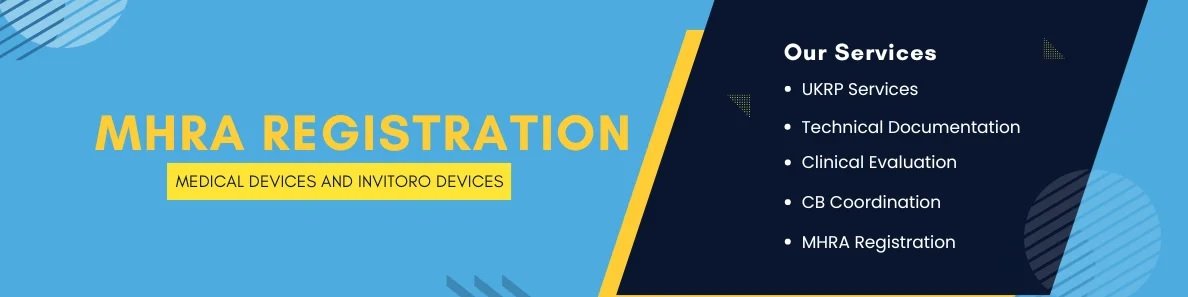
- Appointing a UK Responsible Person (UKRP), where required.
- Preparing relevant technical documentation.
- Completing device registration through the MHRA system.
- Maintaining compliance with applicable post-market surveillance requirements.
Manufacturers based outside the UK generally need to appoint a UK Responsible Person to fulfill specified regulatory responsibilities.
It is important to understand that MHRA registration is not equivalent to product approval or certification. Manufacturers must also meet applicable conformity assessment, marking, and other regulatory requirements before placing their devices on the market.
What Is FDA 510(k) Clearance?
The United States Food and Drug Administration (FDA) regulates medical devices to help ensure their safety and effectiveness.
The FDA 510(k) process is a premarket notification pathway applicable to many Class II medical devices and certain other devices. Through this process, manufacturers demonstrate that their device is substantially equivalent to a legally marketed predicate device.
A successful 510(k) submission generally results in FDA clearance, allowing the device to be marketed in the United States, subject to applicable regulatory requirements.
The submission typically includes:
- Device description and intended use.
- Proposed indications for use.
- Identification of an appropriate predicate device.
- Substantial equivalence comparison.
- Performance testing and supporting evidence.
- Biocompatibility information, where applicable.
- Software documentation, if relevant.
- Labeling and proposed instructions for use.
The documentation required depends on the device’s intended use, technology, classification, and applicable FDA guidance.
Why Hire an FDA 510k Consultant?
Preparing an FDA 510(k) submission requires a thorough understanding of regulatory expectations, technical documentation, and substantial equivalence principles.
An experienced FDA 510k Consultant can support manufacturers throughout the regulatory process, helping them organize documentation and address potential compliance gaps before submission.
Key areas of consulting support include:
1. Regulatory Strategy
A consultant evaluates the device’s intended use, classification, technological characteristics, and potential regulatory pathway. This helps manufacturers determine whether a 510(k) submission is appropriate or whether another pathway may apply.
2. Predicate Device Selection
Identifying a suitable predicate device is a critical component of many 510(k) submissions. Consultants assist with evaluating legally marketed devices and preparing substantial equivalence comparisons.
3. Technical Documentation
Consultants help organize device descriptions, risk management documentation, performance testing reports, labeling, and other supporting evidence required for submission.
4. FDA Submission Preparation
Professional regulatory support can help ensure that the submission is structured clearly and addresses applicable FDA requirements.
5. FDA Questions and Responses
If the FDA requests additional information during its review, consultants can help manufacturers understand the questions and prepare appropriate responses supported by technical evidence.
MHRA Registration vs. FDA 510(k): Key Differences
Although both regulatory pathways support medical device market access, their requirements differ.
| Regulatory Aspect | MHRA Registration | FDA 510(k) |
| Regulatory Authority | UK MHRA | US FDA |
| Market | Great Britain | United States |
| Primary Requirement | Registration and applicable conformity requirements | Premarket notification and substantial equivalence |
| Regulatory Representative | UK Responsible Person, where required | US Agent for applicable foreign establishments |
| Documentation | Technical documentation and regulatory information | Device information, predicate comparison, testing evidence |
| Outcome | Registration does not itself constitute approval | FDA clearance following a successful review |
Manufacturers should evaluate each market independently because compliance in one jurisdiction does not automatically establish compliance in another.
Benefits of Professional Regulatory Consulting
Medical device regulatory requirements can be challenging, particularly for startups, small manufacturers, and companies entering international markets for the first time.
Professional consulting support offers several practical advantages:
- Improved regulatory planning: Identify applicable requirements early.
- Organized documentation: Prepare consistent and traceable regulatory records.
- Reduced submission errors: Address common documentation gaps before filing.
- Efficient communication: Support responses to regulatory questions.
- Market expansion support: Coordinate regulatory activities across multiple jurisdictions.
However, manufacturers remain responsible for ensuring that their devices comply with all applicable regulations.
Conclusion
Achieving medical device market access requires careful regulatory planning, accurate documentation, and ongoing compliance. MHRA Registration is an important step for manufacturers entering the Great Britain market, while FDA 510(k) clearance provides a pathway for eligible devices seeking access to the United States.
Partnering with an experienced FDA 510k Consultant can help manufacturers understand regulatory expectations, prepare technical submissions, and manage interactions with regulatory authorities.
By establishing a clear regulatory strategy from the beginning, medical device companies can better prepare for international expansion while maintaining their commitment to product safety, quality, and regulatory compliance.