
AI Tools for Engineering Design: How Generative AI Is Transforming Modern Engineering
Engineering is entering a new era driven by intelligent automation. Today, AI tools for engineering design are helping architects, engineers, and construction professionals create better designs, reduce manual work, and improve project outcomes. From optimizing structural layouts to automating Building Information Modeling (BIM) coordination, artificial intelligence is changing how engineering teams work. At the same time, generative AI for engineering design is enabling professionals to explore multiple design alternatives quickly while maintaining quality, safety, and efficiency.
As project complexity continues to increase, AI-powered engineering solutions are becoming essential for organizations looking to deliver projects faster and more cost-effectively.
What Are AI Tools for Engineering Design?
AI tools for engineering design use artificial intelligence and machine learning to automate repetitive engineering tasks, analyze design data, and provide intelligent recommendations throughout the design process.
Modern AI-powered engineering platforms can assist with:
- Design optimization
- BIM coordination
- Automated clash detection
- Structural analysis
- MEP design validation
- Workflow automation
- Engineering reporting
Platforms like VAVETEK AI are applying AI to automate BIM clash detection and engineering design optimization, helping construction teams reduce coordination time and improve design accuracy.
Why AI Is Becoming Essential in Engineering
Engineering projects generate massive amounts of design data that can be difficult to manage manually. AI processes this information much faster, allowing engineers to identify conflicts, evaluate alternatives, and make informed decisions early in the project lifecycle.
Key benefits include:
- Reduced design errors
- Faster project delivery
- Better collaboration
- Improved resource utilization
- Lower construction costs
- Higher design quality
Rather than replacing engineers, AI acts as an intelligent assistant that supports faster and more informed decision-making. Research also shows that generative AI has strong potential for concept generation and engineering design support, although human expertise remains essential for final validation.
How Generative AI for Engineering Design Works
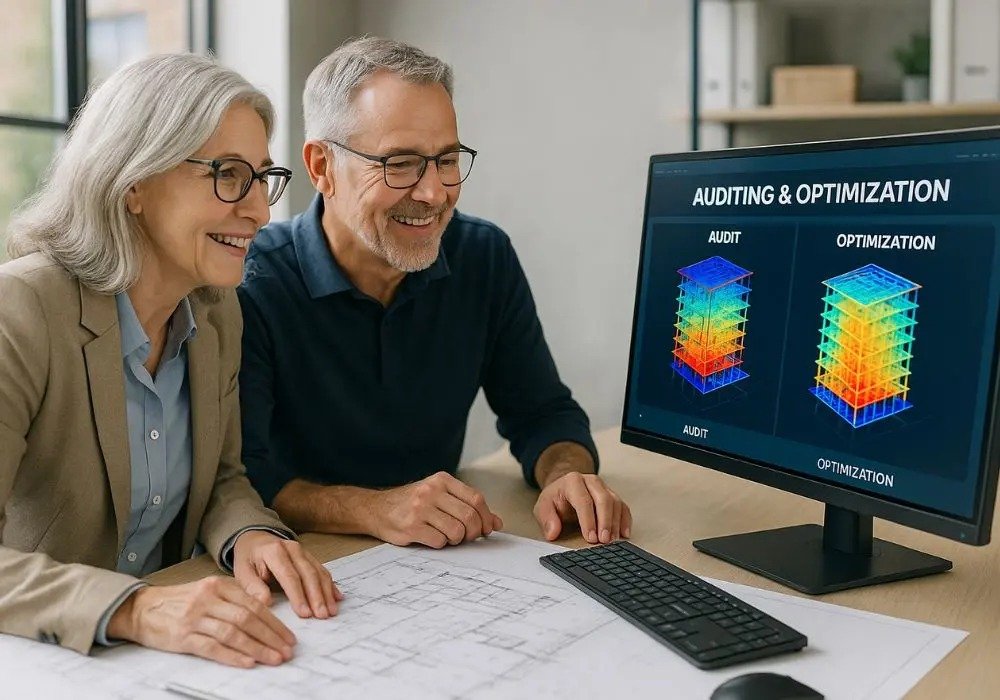
Generative AI for engineering design enables engineers to define project goals, constraints, and performance requirements while AI generates multiple design alternatives automatically.
Instead of creating a single design manually, engineers can evaluate numerous optimized solutions based on factors such as:
Structural Performance
AI can recommend designs that improve strength while reducing material usage.
Cost Optimization
Generative algorithms evaluate different layouts to minimize construction costs without compromising quality.
Sustainability
AI helps identify energy-efficient and environmentally responsible design options.
Faster Iteration
Multiple design concepts can be generated and compared within minutes instead of days.
Applications Across Engineering Disciplines
AI-powered engineering tools are being adopted across multiple sectors.
Common applications include:
- Architectural design
- Structural engineering
- MEP coordination
- BIM automation
- Infrastructure planning
- Industrial facility design
- Construction documentation
For example, VAVETEK AI’s BAMROC platform automatically detects and resolves clashes between MEP and structural systems, significantly reducing manual coordination efforts.
Benefits of AI-Powered Engineering Design
Organizations implementing AI tools for engineering design often experience measurable improvements in productivity and project quality.
Major advantages include:
- Faster engineering workflows
- Reduced manual coordination
- Improved design accuracy
- Better project collaboration
- Lower rework costs
- Increased productivity
- Enhanced decision-making
By automating repetitive engineering activities, professionals can dedicate more time to innovation and solving complex design challenges.
Choosing the Right AI Engineering Platform
Selecting the right solution requires evaluating both technical capabilities and long-term business needs.
Important considerations include:
- BIM compatibility
- Automation features
- Ease of integration
- Scalability
- Data security
- Technical support
- Industry expertise
Choosing software that integrates with existing engineering workflows helps maximize efficiency while minimizing implementation challenges.
The Future of AI in Engineering Design
Artificial intelligence continues to evolve rapidly, creating new opportunities for engineering professionals. Emerging technologies such as AI copilots, digital twins, predictive analytics, and intelligent design assistants are expected to become standard components of engineering workflows.
As generative AI for engineering design matures, engineers will be able to evaluate more design options, improve project quality, and accelerate delivery while maintaining full control over critical engineering decisions.
Conclusion
AI tools for engineering design are transforming the way engineering teams plan, design, and deliver projects. From intelligent BIM coordination and automated clash detection to optimization powered by generative AI for engineering design, these technologies help organizations improve efficiency, reduce costs, and enhance project quality.
Businesses that embrace AI-driven engineering solutions today will be better positioned to manage increasingly complex projects while delivering smarter, faster, and more sustainable outcomes.
FAQs
1. What are AI tools for engineering design?
AI tools automate engineering tasks such as design optimization, BIM coordination, clash detection, and project analysis to improve efficiency.
2. What is generative AI for engineering design?
Generative AI creates multiple optimized design alternatives based on predefined goals, constraints, and performance requirements.
3. Can AI replace engineering professionals?
No. AI supports engineers by automating repetitive tasks and providing recommendations, while human expertise remains essential for design validation and decision-making.
4. Which industries benefit from AI engineering tools?
Architecture, construction, structural engineering, MEP design, manufacturing, and infrastructure projects all benefit from AI-powered engineering solutions.
5. How does AI improve engineering project outcomes?
AI helps reduce design errors, improve collaboration, optimize resources, shorten project timelines, and lower construction costs.