
Aluminium Supplier Singapore: Designing Aluminium Components for Efficient Fabrication
An aluminium component that looks straightforward on a drawing can prove difficult to manufacture. A tightly folded enclosure may crack during bending if the material temper is unsuitable, while a welded frame may require different strength calculations from those used for its original sections. These practical considerations matter to Singapore’s construction companies, manufacturers and engineering workshops, where rejected components can interrupt production schedules.
For businesses using the search term ‘Aluminium Supplier Singapore’, material selection should extend beyond alloy grades and purchase prices. Considering how components will be formed, machined, joined and finished helps engineers prepare specifications that reflect both manufacturing constraints and service requirements.
Understanding Alloy Selection and Material Temper
An alloy designation identifies the material’s composition, while its temper describes the condition resulting from thermal or mechanical treatment. Both influence how aluminium behaves during fabrication.
For example, 5052 is a non-heat-treatable alloy that can be strengthened through strain hardening. The heat-treatable alloy 6061 can achieve different mechanical properties through suitable thermal treatment. Sheets of identical alloy and thickness may therefore require different bending conditions if their tempers differ.
The aluminium sheet thickness and grades guide provides background on commonly used alloys. Engineers should build on this information by checking mechanical properties and specifying the appropriate temper. This is particularly relevant when components require extensive forming or must satisfy defined structural requirements.
Designing Components for Accurate Bending
Bend geometry deserves attention before sheet blanks are cut. An excessively tight internal radius can cause cracking as the outer surface stretches. The appropriate radius depends on factors including alloy, temper, sheet thickness and rolling direction.
Aluminium also exhibits springback after forming. As the tooling pressure is released, elastic recovery can change the bend angle. Trial bends using representative material can help fabricators establish suitable tooling settings before processing a complete batch.
Flat blank dimensions must account for bend allowances rather than simply adding the finished lengths of each flange. Holes positioned too close to bends may become distorted during forming. Reviewing hole positions, flange lengths and tooling clearance during design can prevent avoidable production difficulties.
Aluminium Supplier Singapore: Specifying Thickness and Product Form
Increasing sheet thickness is not always the most efficient response to excessive deflection. Properly designed folds, ribs and stiffeners can improve component rigidity without necessarily increasing material thickness. Their suitability must be established through engineering assessment. Large unsupported panels may also need intermediate supports to control movement under service loads.
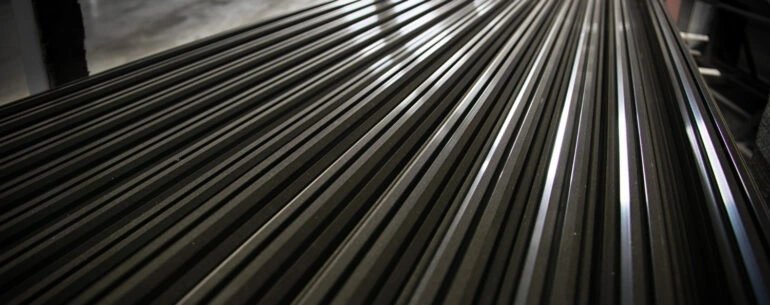
Product form also influences manufacturing costs. Folded sheets suit many equipment housings, while extruded profiles can simplify the production of components with consistent cross-sections. Plates may be appropriate where substantial machining is required.
For buyers researching Aluminium Supplier Singapore options, Kian Huat Metal’s website provides a starting point for exploring industrial metal products. Confirming available alloy and temper combinations, dimensions and product forms before finalising drawings can help avoid unnecessary redesign. Material substitutions affecting structural performance should receive appropriate engineering approval.
Considering Welding, Machining and Assembly
Welding can alter the mechanical properties of aluminium near a joint. Heat exposure may reduce strength in the heat-affected zone of certain strain-hardened or precipitation-hardened alloys. Structural calculations must therefore account for the material condition after welding rather than rely solely on properties of the original stock.
Mechanical fastening may be preferable where components require periodic removal or replacement. Designers should consider tool access, fastener positioning and the sequence in which assemblies will be completed.
Machining introduces different challenges. Thin aluminium sections can deform under excessive clamping pressure, affecting dimensional accuracy. Suitable tooling, workpiece support and effective chip removal help maintain consistent results. Planning these requirements before manufacture is particularly useful for components with narrow walls or closely spaced features.
Selecting Surface Treatments for Tropical Conditions
Aluminium forms a protective oxide film naturally, but it remains susceptible to corrosion under certain exposure conditions. Singapore’s humid climate and airborne salts make outdoor connections and poorly drained surfaces particularly worth assessing.
Anodising and powder coating provide different surface characteristics. Selection should reflect the alloy, intended appearance, environmental exposure and maintenance requirements. Allowances for coating thickness may be necessary at close-fitting connections.
Dissimilar metal contact can create galvanic corrosion when an electrolyte, such as moisture containing dissolved salts, is present. Suitable electrical isolation and drainage details can help manage this risk around fasteners and connections.
For architectural panels, approving a representative finish sample before production helps establish acceptable colour and appearance. Accessible joints and compatible cleaning methods should also be considered so that the finished installation can be maintained without unnecessary dismantling.
Conclusion
Efficient aluminium fabrication starts with a specification that recognises how materials behave throughout production and service. Alloy and temper selection, practical bend geometry, suitable joining methods and appropriate surface treatments all influence the finished component. By coordinating these requirements early, Singapore’s engineers and fabricators can reduce avoidable manufacturing difficulties while maintaining dimensional accuracy, engineering performance and long-term durability.